

How to Touch Up Damaged Furniture
Furniture is an investment that enhances the beauty and functionality of your home or office. However, even the most well-cared-for pieces can suffer from scratches, dings, and other damage over time.
Whether it’s a cherished antique or a modern piece, knowing how to touch up damaged furniture can save you from costly repairs or replacements. LXD Logistics specializes in the careful handling and restoration of high-end furniture. Here are some expert tips on how to touch up damaged furniture effectively.
1. Assess the Damage
Before you begin any touch-up process, it’s crucial to assess the extent of the damage. Damaged freight furniture may be under warranty or protected by carrier insurance. Minor scratches can often be repaired with simple techniques. More severe damage may require professional help. Examine the type of material (wood, metal, fabric, etc.) and the finish (stain, paint, varnish) to determine the best approach.
2. Clean the Affected Area
Start by cleaning the damaged area thoroughly. Use a gentle cleaner appropriate for the material—mild soap and water for wood, or a specific fabric cleaner for upholstered pieces. Research the type of stain and which cleaners work best. Sometimes, laundry detergent or dish soap are the best options. Removing dirt and oils ensures that your touch-up efforts will adhere properly and blend seamlessly with the surrounding areas.
3. Use a Furniture Touch-Up Marker
For minor scratches, furniture touch-up markers can be an effective solution. These markers are available in a variety of colors to match different wood finishes. Simply apply the marker to the scratched area, and gently wipe away any excess with a soft cloth. This quick fix can make small blemishes virtually disappear.
Pro Tip: Buy a variety pack of markers and try them out before using them. Make sure you let the ink dry before comparing colors.
4. Apply Wood Filler for Deeper Scratches
If the damage is more than just a surface scratch, wood filler can help restore the area. Choose a filler that matches the color of your furniture, and apply it with a putty knife, smoothing it out until it’s level with the surrounding wood. Once the filler is dry, sand it lightly to ensure a smooth finish, and then apply a matching stain or paint.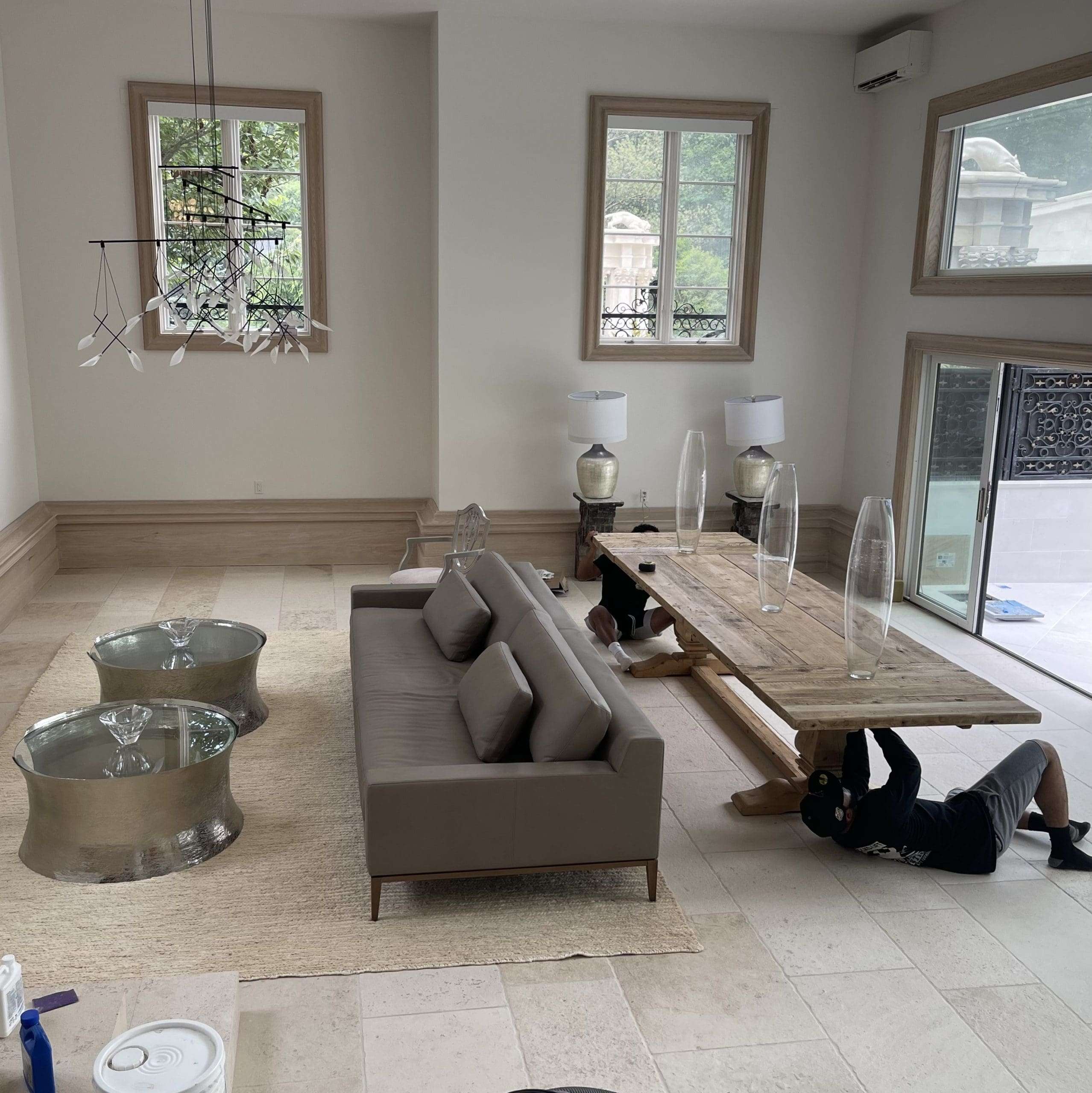
5. Polish and Protect
After the touch-up work is complete, it’s important to protect your furniture to prevent future damage. Apply a furniture polish or wax that is suitable for the material. This enhances the appearance of the piece and provides a protective layer against future wear and tear.
6. Consider Professional Restoration
For valuable or highly damaged pieces, professional restoration might be the best option. At LXD Logistics, we specialize in careful furniture delivery and also offer expert repair and restoration services. Our team can handle everything from refinishing to structural repairs, ensuring your furniture is returned to its original glory.
7. Prevent Future Damage
To avoid future damage, consider implementing preventive measures. Use coasters, placemats, and furniture pads to protect surfaces from scratches, heat, and moisture. Regular maintenance, like dusting and polishing, also plays a crucial role in preserving the condition of your furniture.
Conclusion
Touching up damaged furniture is an art that requires attention to detail and the right techniques. While DIY methods can address minor issues, more significant damage may require professional expertise. At LXD Logistics, we understand the value of your furniture and offer comprehensive services to ensure it arrives at your home in perfect condition. From careful handling during delivery to expert repairs, we’re here to protect your investment.
Need help with furniture restoration or looking for a reliable logistics partner? Contact LXD Logistics today to learn more about our services.